CWS Annual Partners Meeting
The CWS Annual Partners Meeting provides an opportunity for you to learn about our apartment markets, investment strategies, along with our view on the economy, interest rates, and our outlook going forward.
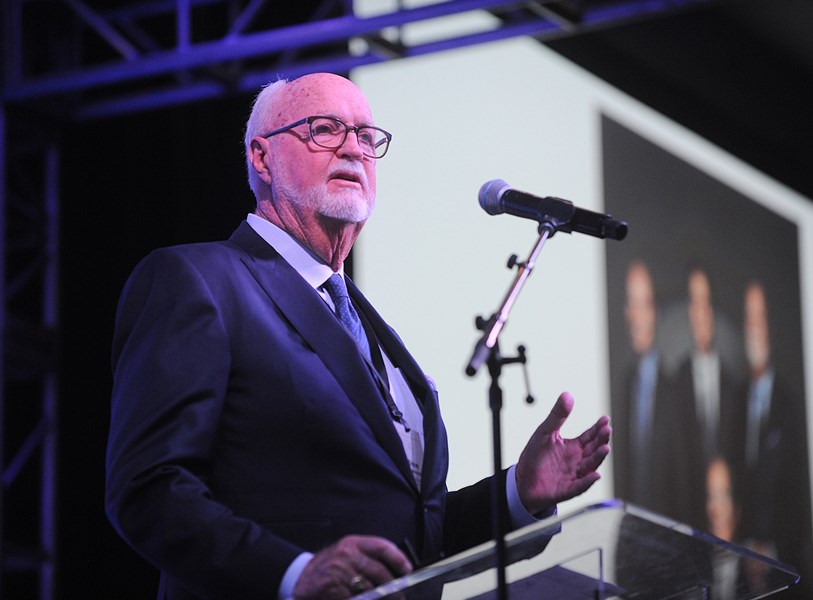
CWS Annual Partners Meeting 2026
For those who were unable to attend our 2026 CWS Annual Partners Meeting held on March 31, 2026 at the Irvine Marriott, a video recording of the meeting is now available and can be viewed by clicking here.
Below is a summary of the meeting.
On March 31, 2026, Gary Carmell opened CWS’s 57th Annual Investor Meeting by grounding the evening in longevity, endurance, and perspective. With nearly four decades at the firm and CWS now in its 57th year, he framed the theme Tempus Probat Omnia—“time proves all”—as a reminder that investment outcomes can only truly be judged over long cycles. Using a vivid Novak Djokovic analogy, Carmell described the past few years as physically and mentally demanding, shaped by significantly higher interest rates, historic new supply delivered to our markets, inflation pressures on operating costs, rent deceleration, and market volatility. CWS, with roughly $7 billion in assets across more than 100 properties and 30,000 units in seven states, has navigated multiple historic downturns before and now finds itself “at sea,” managing difficult currents rather than clear sailing.
He then detailed the macro forces driving today’s challenges. The fastest rate-hiking cycle (Fed Funds increased from near-zero to 5.33% in 18 months) since the 1980s reset valuations across leveraged assets, particularly properties acquired at peak pricing in 2021–2022. At the same time, operating fundamentals weakened as record levels of new apartment supply collided with slowing job growth, reduced immigration, and increasingly price-sensitive renters. Gary showed how public apartment REITs are down roughly 37% from their peaks, implying even steeper equity declines for private owners with higher leverage. He argued that endurance has replaced speed as the winning strategy, contrasting today’s environment with the excess liquidity and aggressive pricing that defined the zero-rate era.
Despite these headwinds, Gary emphasized disciplined stewardship and transparency. While quarterly distributions have declined meaningfully, total distributions since 2022—when including sales and refinancings—remain substantial, and cumulative capital calls have been modest relative to overall portfolio equity. CWS has refinanced 27 properties, reduced floating-rate exposure, built reserves, and actively managed taxes, insurance, and operations to preserve long-term value rather than pursue short-term fixes. Looking ahead, he outlined a focus on managing upcoming loan maturities, stabilizing challenged assets, selectively pursuing new opportunities, and preparing for a supply-driven recovery over the next few years. His message closed with realism and guarded optimism: the bruises are real, but with institutional memory of being around for 57 years, aligned capital, and patience, CWS intends to endure—and be positioned to benefit when the cycle finally turns.
Mike Engels’ presentation followed. He explained that although investors are invested in individual assets rather than the entire portfolio, performance trends at the portfolio level generally mirror what is happening at each property. Looking back at same-store performance, 2025 was a difficult year: total revenues declined due to heavy new apartment supply and softer-than-expected demand, with Austin being the weakest market. On the positive side, expense growth was well controlled, coming in nearly flat—well below inflation—helped by successful property tax protests and a welcome decline in insurance costs after several years of increases.
Despite a 3.3% decline in net operating income in 2025, operating cash flow improved meaningfully due to lower interest expense. Refinancing activity and modest declines in short-term rates reduced interest costs by roughly $25 million, lifting operating cash flow to $42.8 million, well above 2023 levels but still far below the peak years of 2021–2022. Looking ahead to 2026, the outlook is similar: modest revenue gains are expected to be offset by higher expenses, resulting in roughly flat to slightly lower NOI, with operating cash flow projected to land just over $40 million.
Mike then addressed the most pressing investor question—when distributions will increase—and emphasized that the two key drivers are rent growth and lower interest rates, both of which remain uncertain. While recent asset sales produced respectable returns and capital has been redeployed into new investments, broader demand remains constrained by slowing job growth and reduced immigration. The presentation closed by reiterating CWS’s long-term investment philosophy: owning high-quality assets in growing markets, maintaining disciplined operations, leveraging new tools like AI to improve efficiency, and remaining patient. Despite near-term frustration, strong population growth in CWS markets and long-term inflation trends support confidence in eventual recovery and value creation.
Steve Sherwood framed his remarks around accepting uncertainty while staying disciplined about what CWS controls. He emphasized that, despite global, economic, and interest-rate uncertainty, CWS’s clear priority for 2026 is operating excellence across its well-located apartment portfolio. Drawing from recent unannounced site visits, he highlighted the strength of onsite teams, describing property managers as entrepreneurial operators who actively manage leasing, concessions, and inventory with precision. Steve stressed that competing with brand-new developments requires older assets to look equally “crisp and clean,” and he shared examples of teams methodically walking properties from the customer’s perspective to maintain curb appeal, urgency in leasing, and resident satisfaction—key drivers of retention and long-term value.
He then addressed why earlier expectations for rent recovery did not materialize, despite being right on several fundamentals: declining new supply, high barriers to homeownership, growing renter duration, and strong population growth in CWS markets. The miss, he explained, came from weaker-than-expected demand caused by a sharp drop in immigration and slower job growth, both of which continue to constrain absorption. Looking forward, Steve expressed confidence that apartments remain essential in high-growth markets, as new construction slows and single-family housing stays unaffordable for many renters. Given the relatively low affordability of homeownership, Steve explained that the renter age cohort has essentially been expanded materially as people are making home purchases much later in life. He reiterated that CWS leadership is invested alongside the investment partners and fully aligned around restoring growth in operating income and distributions through patience, execution, and long-term stewardship.
➤ Disclosure :
Note the views and statements expressed by the presenters are of the their own opinion and not necessarily indicative of the company's views.
The property pictures featured throughout this website have already been capitalized by CWS investors and are not available for investment. Past performance is no guarantee of future results.
This website is provided to you by CWS Capital Partners. CWS Capital Partners provides investment advice to its proprietary funds. Through its affiliate CWS Apartment Homes it offers real estate related advice. Investment opportunities may be in the form of a single property offering or a pooled investment vehicle and are through an affiliated entity, CWS Investments. CWS Investments is a registered broker dealer, member FINRA SIPC. The information on this website is not intended to be investment advice or an offer; offers can only be made with the private placement memorandum and offering documents.
Private placement real estate securities offerings are speculative and involve substantial risks. Risks may include, but are not limited to, illiquidity, lack of diversification, loss of capital, default risk, environmental, development, and capital call risk. Investments may not achieve their objectives as outlined in their business plans.
For more information about CWS Capital Partners see its Form ADV. For information about CWS Investments see its Form CRS and FINRA Broker Check .